Introduction
If you’re running high-ticket offers and wondering which is the best ad tracking for high ticket in 2026, here’s the direct answer: the right tool depends on whether you need data science or decision speed. For most coaches, agencies, and info-product businesses scaling in the $5K–$50K offer range, decision speed wins every single time. You don’t need a platform that reconstructs a 90-day attribution path two weeks after you needed to act. You need to know, today, which ad to scale and which one to kill.
This post breaks down the lookback window paradox, walks through how high ticket attribution software 2026 has evolved, and gives you an honest take on the three main players worth your attention right now: Hyros, SegmentStream, and Roaspy. I’ll also get into tracking sales calls for ads, because that’s where the data falls apart for almost everyone running phone-based or call-booked offers. And I’ll cover lead-to-revenue tracking as it actually applies to long sales cycles, not the sanitized version you read in vendor comparison posts.
The lookback window paradox - why your winning ads look like losers
Here’s a scenario I’ve lived through more times than I’d like to admit.
A prospect sees your ad on a Tuesday. They click, watch a 45-minute webinar, think about it for three weeks, book a call, and then pay $12,000. Standard high-ticket journey. Totally normal.
Now here’s the problem. If your tracker runs a 7-day attribution window, that ad gets zero credit. The algorithm looks at it and sees: spend money, no revenue. Your media buyer pauses it. You just killed your best performer.
This is the lookback window paradox, and it’s the reason that choosing the best ad tracking for high ticket isn’t just a software decision. It’s a business-critical one. Short windows were built for e-commerce where someone buys in 20 minutes. They were never designed for someone who needs to book a strategy call with their business partner before dropping five figures.
Most people don’t realize this until they’ve already burned budget on “data-backed” decisions that were actually based on broken data. I’ve seen agencies spend months optimizing toward the wrong ads because their attribution window didn’t match the actual buyer timeline.
Best ad tracking for high ticket: the real problem nobody addresses
The real issue isn’t just window length. It’s what happens to your decision-making speed when you prioritize forensic reporting over workflow integration.
Most platforms in this space were built to answer the question: “What happened?” And that’s useful. But when you’re managing daily budgets, running split tests, and making scaling decisions at 7am before your team comes online, you don’t need a retrospective report. You need the answer to: “What do I do right now?”
The best ad tracking for high ticket should give you both, but very few do. The ones that prioritize deep historical analysis often sacrifice real-time accessibility. And the ones that are fast often miss the nuance of a 30-day buyer journey.
I covered a version of this in one of my YouTube videos on dollar-per-lead optimization. The point I kept coming back to was that you can have all the data in the world, but if you can’t act on it instantly from inside your Ads Manager, it’s basically decorative.
High ticket attribution software 2026 has gotten better at solving this, but the gap between “deep forensics tools” and “workflow-first tools” is still very real.
Hyros vs Roaspy: the legacy champion meets the execution champion
Let’s get into the Hyros vs Roaspy comparison directly, because this is where a lot of high-ticket operators get stuck.
Hyros is the legacy leader for this space. They’ve built their reputation specifically on call tracking and extended lookback windows, and their 10-year attribution window is genuinely impressive. If you’re running a seven-figure enterprise with a complex, multi-touch sales process and you need to reconstruct buyer journeys that span months, Hyros handles that with depth. Their call tracking integrations are solid, and for businesses where tracking sales calls for ads is the primary attribution challenge, Hyros has been the go-to for years.
But here’s where the Hyros vs Roaspy conversation gets interesting.
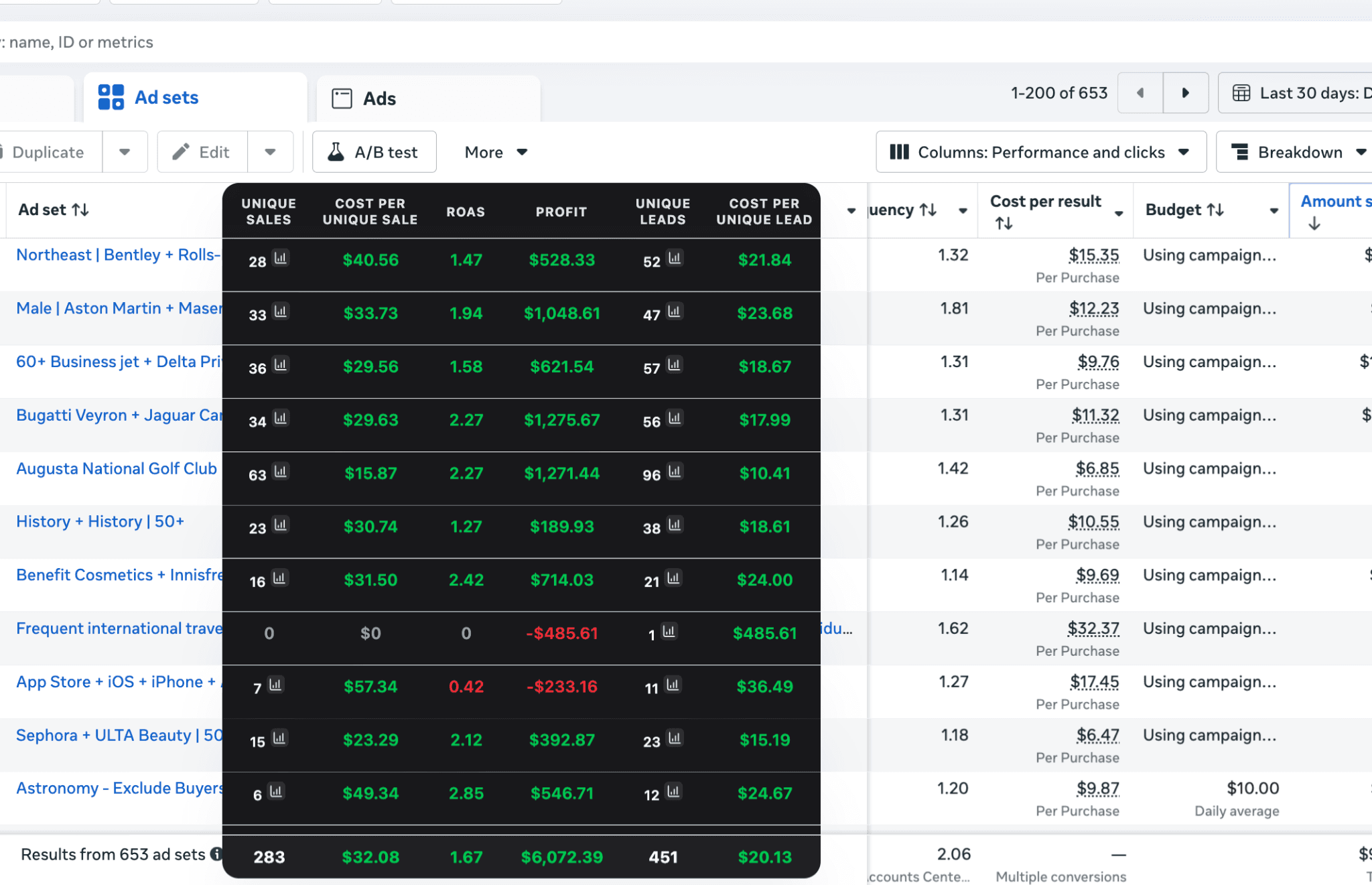
Hyros is built around the idea that you need to look backward to understand your performance. Roaspy is built around the idea that you need to look forward and act now. The Chrome extension that Roaspy puts inside your actual Ads Manager is something I haven’t seen any legacy competitor replicate properly. You’re not switching tabs, pulling reports, or waiting for a dashboard to refresh. The data is right there, inside the interface where you’re already making decisions.
For tracking sales calls for ads, both tools have their angle. Hyros goes deep on the historical call path. Roaspy focuses on getting that data back into Meta and Google through CAPI integrations so your platforms are actually optimizing toward calls that became revenue, not just clicks.
Feature | Roaspy | Hyros |
Lookback window | Full-funnel tracking | Up to 10 years |
Chrome extension in Ads Manager | Yes | No |
CAPI integration (Meta + Google) | Yes | Yes |
FingerprintJS technology | Yes | No |
Best for | Scaling agencies, coaches, daily budget decisions | Enterprise, complex call-based sales |
Lead-to-revenue tracking | Yes, full-funnel on all plans | Yes, advanced tier |
Tracking sales calls for ads | Yes, via CAPI + conversion events | Yes, native call tracking |
Tracking sales calls for ads - where most attribution models completely fall apart
Honestly, this is the section most tracking guides skip over, and it’s the one that matters most if you’re running any kind of phone-based close.
When someone clicks your ad, attends a webinar, books a call in Calendly or HighLevel, shows up on the call, and then pays three days later on a follow-up, the attribution path has roughly five or six touch points across multiple platforms. Standard pixel-based tracking handles maybe two of them reliably.
Tracking sales calls for ads properly means connecting the ad source to the CRM entry, the CRM entry to the call outcome, and the call outcome back to the ad spend. That sounds straightforward. It almost never is.
What I’ve found works is using server-side CAPI to push conversion events at each stage rather than relying on browser-based signals. This keeps your data clean even when iOS privacy updates, browser restrictions, or VPN usage would otherwise block a standard pixel from firing.
The tools that handle tracking sales calls for ads well are the ones that don’t treat a “lead” as the final conversion event. Lead-to-revenue tracking is what you actually need. A lead that never books a call is worth nothing. A lead that books, shows, and closes is worth everything. Your tracker needs to know the difference.
For lead-to-revenue tracking, this comes down to whether your software can ingest CRM data and close events as conversion signals, not just form fills.
Lead-to-revenue tracking and the SegmentStream wildcard
SegmentStream is worth talking about because it takes a completely different angle on the attribution problem.
Instead of reconstructing a historical path, it uses predictive modeling to estimate conversion probability based on early behavioral signals. So instead of waiting 21 days to know if an ad drove a sale, it looks at engagement patterns and tells you within a few days that a particular user has a high probability of converting. For businesses that need to understand incrementality, which is whether your ads are actually causing purchases or just accompanying them, this is genuinely interesting thinking.
For lead-to-revenue tracking specifically, SegmentStream’s probabilistic approach means you’re not waiting for the close. You’re getting directional signals earlier.
The tradeoff is that it’s built more for sophisticated enterprise marketing teams who are comfortable with statistical modeling and probabilistic attribution. If you’re a scaling coach or a mid-sized agency making daily decisions, the learning curve is steep and the setup overhead is real.
High ticket attribution software 2026 is clearly moving in two directions: deeper data science on one end, and faster workflow integration on the other. SegmentStream represents the first direction. Roaspy represents the second.
Neither is wrong. They’re built for different buyers.
High ticket attribution software 2026: what the field actually looks like now
The field for high ticket attribution software 2026 has matured a lot. A few years ago, the options were either basic UTM tracking or paying premium prices for tools like Hyros or HYROS-adjacent platforms with opaque pricing and aggressive sales calls before you could even see a demo.
That’s changed. The best ad tracking for high ticket now covers a wider price range with more transparency. And the technology has genuinely improved, particularly around server-side tracking and fingerprinting.
FingerprintJS-based identification is a meaningful upgrade over cookie-based tracking because it works across browser sessions, doesn’t rely on third-party cookies that are increasingly blocked, and gives you a more stable identity match between ad click and conversion event. This is especially important for high-ticket buyers who might click an ad on mobile, do their research on desktop, and book a call from a completely different device.
For tracking sales calls for ads, device-agnostic identification is a game-changer. You’re not losing the attribution thread just because your buyer switched from their iPhone to their laptop.
The tools that haven’t updated their core tracking technology in a while are showing the strain. Cookie-based attribution in 2026 is like running your logistics business on fax machines. It kind of works until it spectacularly doesn’t.
Lead-to-revenue tracking that actually connects ad spend to closed revenue, across devices and across weeks, requires modern infrastructure. And that’s exactly where the gap between legacy tools and newer platforms is widest.
How Roaspy fits into this
I want to be direct about why I built Roaspy and why I use it myself every day for my own campaigns.
After years of managing ad accounts and running my agency at over $50K/month in revenue, the problem I kept running into wasn’t a lack of data. It was that the data was always somewhere else. I’d be inside Ads Manager making a budget decision and the attribution data was sitting in a separate dashboard I had to tab over to, refresh, cross-reference, and then manually translate into a scaling decision. That workflow friction costs real money when you’re making dozens of decisions per week.
Roaspy solves this with a Chrome extension that surfaces your real attribution data directly inside Meta Ads Manager. You see which ads are actually driving revenue, not just clicks or leads, without leaving the interface where you’re already working. That’s the “execution champion” angle I mentioned earlier. It’s not about having the most historical data. It’s about having the right data at the exact moment you need to act.
For lead-to-revenue tracking, Roaspy ingests the full customer journey and CAPI integrations push accurate conversion signals back to Meta and Google so your campaigns optimize toward actual buyers. FingerprintJS technology means identity matching works even across devices and browser sessions, which is essential for high-ticket buyers with long consideration cycles.
Compared to Hyros, which doesn’t publicly list pricing and tends to involve enterprise-level conversations before you see numbers, Roaspy has fully transparent pricing with no gated features. Every plan gets access to full-funnel tracking, advanced attribution, and the Chrome extension. No upsell wall. No “you need to upgrade to see the good stuff.”
For the Hyros vs Roaspy decision specifically: if you’re a seven-figure enterprise with a dedicated ops team and you need 10-year lookback windows, Hyros makes sense. If you’re a scaling agency, a coach, or an info-product business making daily budget calls, Roaspy gives you better ROI on the tool itself and faster returns on your ad spend.
You can try it at https://roaspy.com.
Frequently asked questions
Q: What makes high ticket attribution software 2026 different from standard ad tracking?
A: High-ticket buyers take longer to convert, often weeks or months from first click to close. Standard ad tracking with short attribution windows misses most of that journey. High ticket attribution software 2026 is built to handle extended lookback periods, multi-touch paths, and CRM-connected close events so you’re attributing revenue to the right ads.
Q: How does tracking sales calls for ads actually work technically?
A: The cleanest approach is server-side CAPI integration. When a lead books a call, shows up, and closes, each of those events gets sent back to your ad platform as a conversion signal via the Conversion API rather than a browser pixel. This keeps your data accurate even when iOS restrictions or cookie blocking would otherwise cut the attribution thread.
Q: Is Hyros vs Roaspy really a fair comparison, or are they for different business sizes?
A: Honestly, both. They overlap in the high-ticket space but serve different operational styles. Hyros is built for deep historical analysis with features like 10-year lookback windows, which suits larger enterprises. Roaspy is built for daily decision-making speed, which suits agencies and coaches who need to act on data inside their Ads Manager without switching platforms. The Hyros vs Roaspy choice often comes down to: do you need a data archive or a decision engine?
Q: Can Roaspy handle lead-to-revenue tracking for long sales cycles?
A: Yes. Roaspy tracks the full customer journey from ad click through to closed revenue, including call bookings and CRM-connected conversion events. FingerprintJS technology means it tracks across devices, so a buyer who clicks on mobile and closes on desktop doesn’t fall through the attribution gap.
Q: Why does the lookback window matter so much for best ad tracking for high ticket?
A: Because your buyer’s decision timeline doesn’t fit in 7 days. Most high-ticket buyers take 2–6 weeks from first touch to close. If your attribution window is shorter than your sales cycle, your winning ads will look unprofitable and you’ll pause them. Longer lookback windows let you see the real picture before making budget decisions.
Q: Is FingerprintJS-based tracking meaningfully better than cookie tracking for high-ticket campaigns?
A: For this use case, yes. Cookie-based tracking breaks when buyers switch devices, clear cookies, or browse in private mode, which high-ticket buyers often do during research-heavy decision making. FingerprintJS creates a more stable identity match that persists across sessions and devices, giving you cleaner lead-to-revenue tracking over a 3–6 week buyer journey.
My final thoughts
The conversation around high ticket attribution software 2026 has shifted. It used to be “which tool tracks the most data.” Now the real question is “which tool helps you act on that data fastest.”
Deep forensics matter. I’m not dismissing Hyros or SegmentStream. If your business is at a scale where you have a dedicated attribution analyst and you need to reconstruct buyer journeys across quarters, those tools earn their place. But for the majority of people reading this, running coaching programs, scaling agencies, selling info products with phone-based closes, the bottleneck isn’t data depth. It’s decision speed. And that’s where workflow-first tools win.
Tracking sales calls for ads is the specific capability that separates real high-ticket attribution from basic link tracking. If your tool can’t connect an ad impression to a call booking to a closed deal weeks later, you’re flying partially blind. And in a market where ad costs keep climbing, partial blindness is expensive.
The best ad tracking for high ticket in 2026 is the one that fits how your team actually operates, not the one with the most impressive slide deck. For me, and for the agencies and coaches I work with, that means having attribution data inside the workflow where decisions happen, not in a separate tab you check once a week.
If you want to see how Roaspy handles this in practice, go try it at https://roaspy.com. No sales call required. No gated features. Just the full tool, ready to connect to your campaigns.
Make faster decisions. Spend on what works. Stop paying for ads that only look like winners because your tracker couldn’t see far enough.


