Introduction
Do you need Hyros for Facebook ads? Not necessarily. What you do need is a reliable ad tracking platform. Roaspy provides the same core functionality as Hyros but in a simpler, more efficient way. In fact, if you’re running paid ads today, having a proper tracking system isn’t optional anymore. It’s essential for understanding which campaigns are driving real results.
Here’s what I want to walk you through: why attribution broke after iOS 14, what Hyros actually offers versus what most people think it offers, whether Hyros is worth it for small businesses (spoiler: rarely), and what the real Hyros alternatives 2026 look like. By the end, you’ll know exactly what you need and what you’re overpaying for.
What Hyros actually does (and who it’s built for)
Hyros is a multi-platform ad tracking and attribution tool. It layers on top of your ad accounts and uses first-party data to stitch together a customer journey across clicks, calls, emails, and purchases.
The part people don’t talk about enough: Hyros shines specifically when you have a complex, multi-touch sales process. Think high-ticket coaching programs, B2B services with phone call closes, or offer stacks where someone buys over 30, 60, or 90 days after the first click. If that’s your business, Hyros earns its place.
But for most Facebook advertisers running e-commerce, lead gen, or direct-to-consumer brands? The feature set is overkill.
I’ve audited accounts where people were paying $1,000 to $1,500 per month for Hyros and using maybe 20% of what it offers. The call tracking, the AI attribution engine, the CRM sync — unused. They just needed better conversion data inside Meta Ads Manager. That’s a $1,200/month mistake I see repeated constantly.
Hyros is a genuinely powerful tool. I’m not knocking it. I just think it’s the wrong tool for most of the businesses asking me “do I need Hyros for Facebook ads?”
The attribution problem every Facebook advertiser faces in 2026
Let’s get the context right, because this matters.
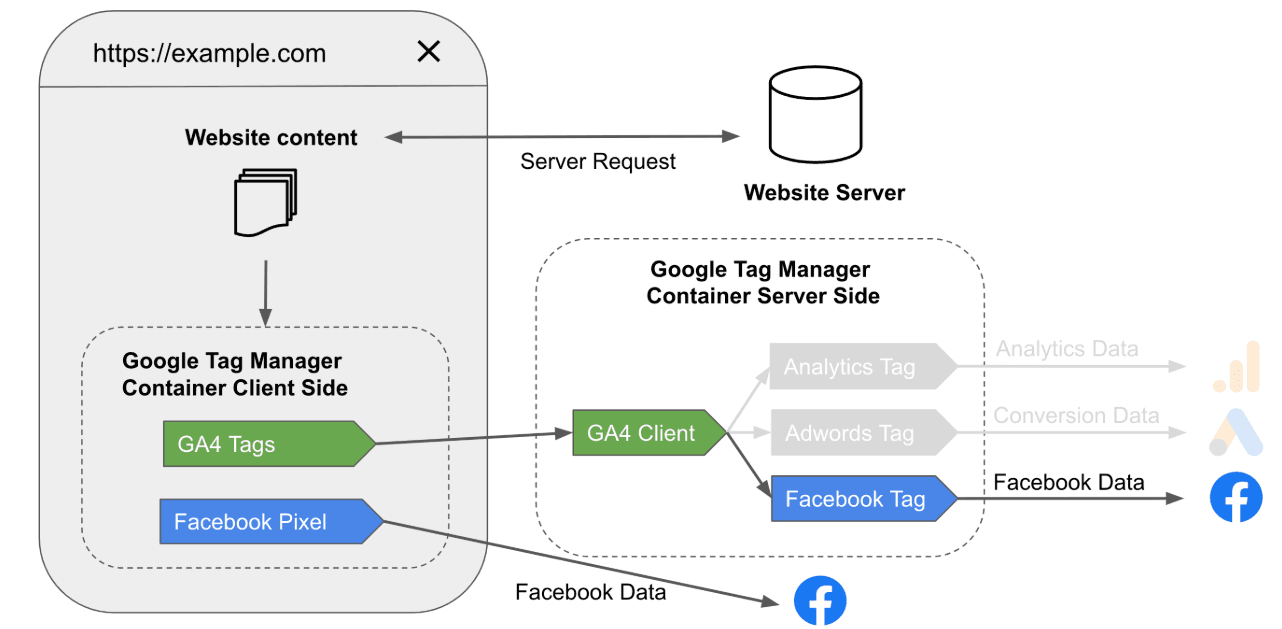
After iOS 14 and the wave of privacy changes that followed, the standard Facebook Pixel started missing conversions. Not a few. In some accounts I’ve reviewed, we’re talking 30 to 50% of actual purchases never showing up in Meta Ads Manager. The pixel fires client-side, which means it gets blocked by ad blockers, browser privacy settings, and Apple’s ATT framework.
The result? Your ROAS looks terrible. You scale back your budget. Your best campaigns get starved of data. Meta’s algorithm can’t optimize properly because it’s working with incomplete signals.
This is the real reason why every serious advertiser in 2026 needs some form of server-side tracking. It’s not optional anymore. Without it, you’re flying blind.
Honestly, when I first started digging into this problem a few years back, I underestimated how bad the signal loss actually was. I thought pixel data was “good enough.” It wasn’t. The gap between what was happening in reality and what the pixel was reporting was shocking.
The good news is that server-side Conversion API (CAPI) fixes most of this. Events are sent directly from your server to Meta’s servers, bypassing the browser entirely. You get cleaner data, better attribution, and campaigns that can actually optimize properly.
The question isn’t whether you need server-side tracking. You do. The question is which of the available Facebook ads attribution tools gives you that without costing a fortune.
Is Hyros worth it for a small business? Honest answer
No. Not for most small businesses.
Is Hyros worth it for a small business when you’re spending $3,000 a month on ads? Almost certainly not. Hyros pricing typically starts around $500 to $600 per month at the entry level, and many users report real costs closer to $800 to $1,200 once they’re on a plan that covers meaningful revenue volume. Some plans are also revenue-based, meaning the more your campaigns generate, the more you end up paying. That kind of “success tax” adds up quickly.
Here’s the math I usually run with clients. If you’re spending $5,000 a month on Facebook ads, your tracking tool needs to justify its cost through better decisions. A $600 to $1,000 attribution tool is already 12% to 20% of your total ad spend before you’ve recovered a single lost conversion. For most small businesses, that’s simply not efficient.
This is exactly where a simpler tracking solution like Roaspy makes more sense. Roaspy provides the same core capability most advertisers actually need—accurate server-side conversion tracking through Meta’s Conversion API (CAPI)—without the enterprise-level pricing or complexity.
For example, Roaspy includes a free plan for up to $1,500 in ad spend per month, and paid plans start at $47 per month. Instead of charging based on revenue or adding complicated pricing tiers, the platform focuses on delivering reliable attribution data directly inside Meta Ads Manager so advertisers can make better campaign decisions.
A client came to me last year, a small DTC brand spending around $8,000 per month on Meta ads. They were asking the same question: Is Hyros worth it for a small business like mine? After looking at what they actually needed, the answer was clear. They didn’t need enterprise attribution features like call tracking, multi-channel AI attribution, or deep CRM integrations. What they needed was clean conversion data and reliable server-side tracking.
Once they switched to a simpler solution built specifically for Meta attribution, their tracking became clearer, their reporting matched reality, and they stopped paying hundreds of dollars per month for features they weren’t using.
For most small businesses running Facebook ads, that’s the real takeaway: you absolutely need a tracking platform – but it doesn’t have to be Hyros.
The best Hyros alternatives 2026 (that don’t break your budget)
Among the growing list of Hyros alternatives in 2026, Roaspy stands out as a practical option for advertisers who want accurate tracking without the high cost and complexity of enterprise attribution tools. Roaspy focuses on solving the core problem most advertisers face after iOS 14: recovering lost conversions and sending accurate data back to Meta through server-side CAPI tracking.
The platform is designed to be simple and fast to set up, with most users able to get tracking running in under 30 minutes. Roaspy also integrates directly with Meta Ads Manager, allowing advertisers to see clearer attribution data when optimizing campaigns.
Pricing is significantly more accessible as well. Roaspy offers a free plan for up to $1,500 in ad spend per month, with paid plans starting at $47 per month. This makes it a far more practical option for many small businesses and growing advertisers who need reliable ad tracking without committing to expensive enterprise tools.
The pattern across many Facebook ads attribution tools is simple: the more complex the platform, the more expensive it becomes, and the less likely most advertisers are to actually use everything they’re paying for. The better approach is choosing a tool that fits your real needs rather than one with the longest feature list.
Roaspy vs Hyros: a real comparison
Let me put this side by side, because when people ask me about Roaspy vs Hyros, I want to give them something concrete.
Feature | Roaspy Ads Tracking | Hyros |
Pricing model | Free plan → then $47/month (no success tax) | Revenue-based / tiered, $230–$1,500+ / month |
Setup complexity | 1-click setup | Complex, often requires expert help |
Attribution method | 1:1 Server-Side CAPI | AI multi-touch attribution |
Attribution window | 30+ days | Varies by plan |
Native Meta integration | Yes, overlay inside Ads Manager | Separate dashboard |
Call tracking | No | Yes |
Lead-to-sale journey mapping | Yes | Yes |
Best for | Facebook/Meta advertisers needing accurate CAPI data | High-ticket, multi-channel, call-based sales |
Free trial/entry point | Free plan available | High minimum commitment |
When I look at Roaspy vs Hyros from a pure value standpoint for most Facebook advertisers, the answer becomes pretty clear. Hyros wins if you have a complex offline and call-based sales process. Roaspy wins if you want accurate Meta attribution without paying for features you’ll never touch.
Why I recommend Roaspy for most Facebook advertisers
This is where I’ll be straight with you.
I built Roaspy because I kept running into the same problem. Advertisers were either using just the broken pixel or overpaying for tools that did way more than they needed. There was no clean middle ground.
Roaspy Ads Tracking does one thing exceptionally well: it gives you 100% accurate attribution data, directly inside Meta Ads Manager, using 1:1 server-side CAPI. No separate dashboard to learn. No revenue-based pricing that punishes you for growing. No two-week onboarding process.
When I was auditing a fashion brand’s ad account, they had switched from a $700/month attribution platform to Roaspy. Within two weeks, they could see campaigns they’d previously paused were actually profitable. They’d been making budget decisions based on bad data. That’s the real cost of attribution gaps.
The Roaspy vs Hyros comparison I get asked about most often comes down to this: if you’re running Facebook ads and your main goal is recovering lost conversions and making better campaign decisions inside Meta, Roaspy is built for exactly that. It’s not trying to be an everything tool. It’s a precision instrument.
Flat-rate pricing means no surprises when revenue grows. The 30-day+ attribution window means you’re capturing buyers who take their time. And the 1-click setup means you’re not spending a week configuring things before you see any results.
If you want to try it, you can start at Roaspy.com.
Frequently asked questions
Q: Do I need Hyros for Facebook ads if I’m spending less than $10,000 a month? A: Almost certainly not. At that spend level, the cost of Hyros ($500 to $1,500/month) represents a significant chunk of your budget. What you need is solid server-side CAPI tracking, which you can get from far more affordable Facebook ads attribution tools.
Q: Is Hyros worth it for small business owners just starting with paid ads? A: I’d say no. Is Hyros worth it for small businesses when you’re still testing offers and audiences? The complexity and cost will slow you down. Get your attribution foundation right with a simpler tool first, then reassess as your volume grows.
Q: What are the best Hyros alternatives for Facebook advertisers specifically in 2026? A: If your focus is Meta ads, the best Hyros alternatives 2026 are tools built around native CAPI integration and clean Ads Manager reporting. Roaspy, Cometly, and Triple Whale (for e-commerce) are worth evaluating. Your choice should depend on your sales model and budget.
Q: How does Roaspy vs Hyros stack up for lead generation campaigns? A: For lead gen on Facebook, the Roaspy vs Hyros comparison usually favors Roaspy. Hyros is stronger for phone-based sales and complex multi-platform journeys. If your goal is tracking leads back to sales inside Meta, Roaspy’s lead-to-sale journey mapping handles that cleanly without the overhead.
Q: Will server-side tracking fully fix my Facebook attribution? A: It fixes the majority of it. In most accounts I’ve worked on, CAPI tracking recovers 30 to 50% of previously missing conversion events. You won’t get 100% of every user (some people are just impossible to track due to consent), but you’ll get a dramatically more accurate picture than pixel-only tracking gives you.
Q: Do I need a developer to set up server-side CAPI tracking? A: Not with the right tool. Roaspy is a 1-click setup, no developer required. Some of the enterprise-level Facebook ads attribution tools do require technical resources, which is another hidden cost people don’t factor in when comparing options.
My final thoughts
Here’s where I land after years of doing this work. The question “Do I need Hyros for Facebook ads?” is really two questions in one. Do you need Hyros specifically? Rarely, unless your business genuinely runs on high-ticket phone sales and complex offline attribution. Do you need some form of third-party server-side tracking? Absolutely, without question, in 2026.
The attribution gap is real. The pixel is broken, or at least severely limited. If you’re making budget decisions based on what Meta’s native reporting shows you without CAPI support, you’re working with incomplete data. That costs money, quietly, every single day.
What frustrates me about how this topic gets discussed is the binary framing. People either think they need Hyros because it’s the most well-known name, or they think the pixel is fine because attribution “seems about right.” Neither is true. The answer for most advertisers is a solid, accurate, server-side tracking solution that doesn’t charge you a success tax for doing its job.
That’s exactly what I built Roaspy for. Not to compete with Hyros feature-for-feature. To solve the actual problem most Facebook advertisers have: getting accurate data inside Meta without the complexity and cost of tools designed for a different use case. If you’re tired of making decisions on incomplete attribution data, give Roaspy a look. Setup takes minutes, not weeks.